
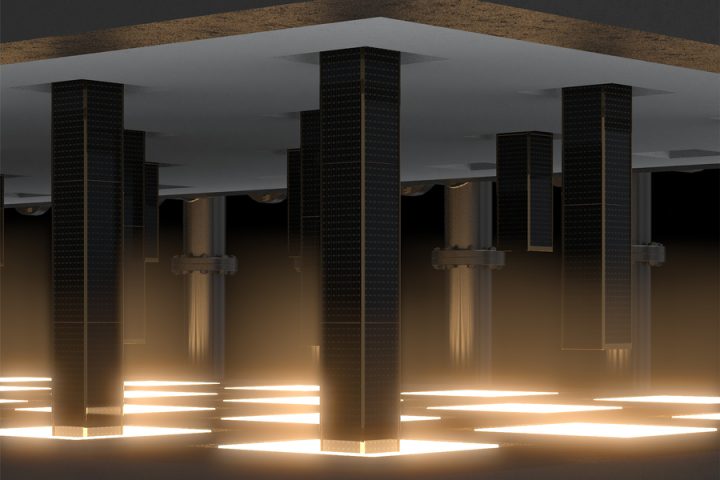
Researchers in the United States have developed a new kind of battery that doesn’t rely on chemicals in the traditional sense. Instead, it stores energy as heat—reaching temperatures as high as 4,350°F (2,400°C)—inside specially designed carbon blocks. This breakthrough could offer a cheaper and more durable way to store large amounts of renewable energy.
Turning Electricity Into Heat—and Back Again
The system converts excess electricity, often generated by solar panels or wind turbines, directly into thermal energy. It stores this energy by heating solid carbon blocks to extremely high temperatures. When demand rises, the system converts the stored heat back into electricity using devices similar to solar panels, known as thermophotovoltaic cells.
Unlike lithium-ion batteries, which degrade over time and depend on rare materials, carbon-based thermal batteries use abundant and inexpensive elements. This approach makes them particularly attractive for large-scale energy storage, such as stabilizing power grids.
Why Carbon Blocks?
Carbon plays a crucial role in this technology because it withstands extreme temperatures without melting. At around 4,350°F, the blocks glow intensely and emit light, which thermophotovoltaic cells capture and convert into electricity. The system mimics how the Sun emits energy, but engineers control it within a compact setup.
Another advantage is longevity. Since the system avoids chemical reactions that wear down components, it can last significantly longer than conventional batteries and reduce long-term costs.
A Step Toward Cleaner Energy Systems
One of the biggest challenges with renewable energy is storage—how to save power for when the sun isn’t shining or the wind isn’t blowing. This heat-based battery offers a promising solution by providing a stable, scalable, and cost-effective way to store excess energy.
If industries deploy this technology at scale, it could reduce reliance on fossil fuels and accelerate the transition to cleaner energy systems worldwide.
Article & Image by MIT
