
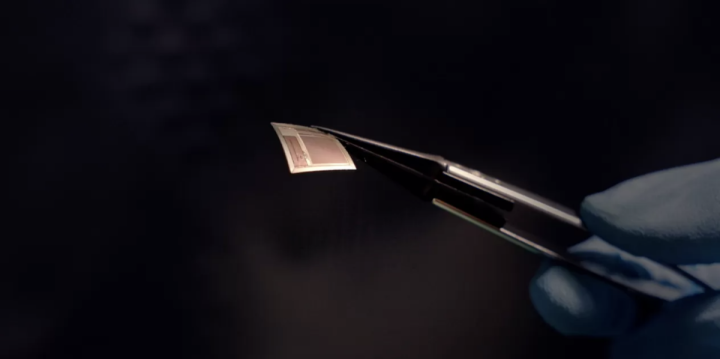
A tiny silicon implant no larger than a postage stamp is offering a glimpse into a future where human thoughts could communicate directly with artificial intelligence. Developed by neuroscientists and engineers working at the intersection of brain science and computing, the implant is designed to read neural signals and transmit them wirelessly to an AI system in real time.
How the Implant Works
The ultra-thin device is placed on the surface of the brain rather than penetrating deep tissue, reducing the risk of damage. Once in position, it detects electrical patterns produced when a person thinks, imagines speech, or attempts to move. These signals are then translated into digital data and sent almost instantly to an external computer or cloud-based AI via a wireless connection.
Unlike earlier brain–computer interfaces that required bulky hardware or external wires, this implant operates independently and consumes very little power. As a result, it can function continuously without interfering with daily life. Researchers say this efficiency is what makes real-time communication between the brain and AI possible.
Why Scientists Are Excited
The technology could transform how people with paralysis or speech loss communicate. Instead of typing or using eye-tracking tools, users could convey ideas simply by thinking. At the same time, AI systems could analyze neural patterns to better understand intent, language, and even emotional context.
Beyond medical uses, the implant raises the possibility of seamless human–AI collaboration. In theory, thoughts could be converted into text, commands, or queries without ever touching a screen or keyboard.
Ethical and Privacy Questions
However, the idea of thoughts being emailed to AI also sparks serious concerns. Researchers emphasize that the implant does not read thoughts indiscriminately. It only records specific neural activity that the user intentionally generates. Even so, experts argue that strong safeguards will be essential to protect mental privacy as the technology advances.
While widespread use is still years away, the postage-stamp-sized implant marks a significant step toward merging human cognition with artificial intelligence.
Article & Image source by Columbia University
