
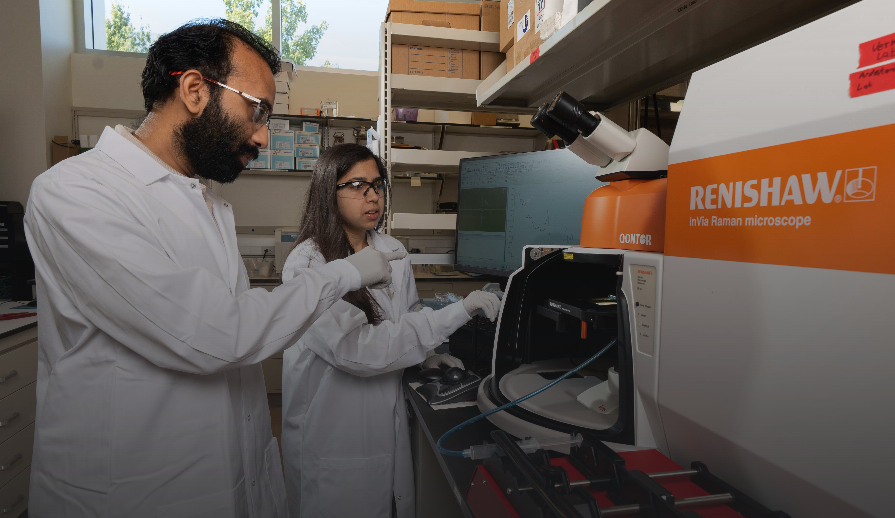
A research collaboration between Purdue University and Merck & Co. has produced a new analytical tool that monitors vaccine quality continuously during production. Using Raman spectroscopy—a laser-based technique that reads molecular “fingerprints”—the system provides quality-control data in less than 30 seconds without removing samples from the line.
The patent-pending technology addresses one of biomanufacturing’s most persistent bottlenecks: time-consuming, offline testing. Conventional methods require samples to be withdrawn from the process and analyzed separately, delaying results and raising the risk of variability between batches. By contrast, the Purdue–Merck tool operates inline, offering near-instant confirmation that viral particles meet target specifications as they flow through the production system.
Lead researcher Mohit Verma, associate professor of agricultural and biological engineering at Purdue, said the study demonstrates that process analytical technology (PAT) can support rapid release of biologics. His team validated the Raman-based system at industrially relevant flow rates using human cytomegalovirus (CMV) as a model. CMV primarily affects immunocompromised patients, and its complex structure has long made vaccine development difficult.
Graduate researcher Shreya Athalye noted that Raman spectroscopy is particularly suited to biological systems because it is nondestructive and compatible with water-rich samples. The technique measures scattered light from a laser beam to identify chemical bonds and structures, allowing researchers to quantify viral particles and verify integrity in real time.
Testing confirmed that the tool could detect and characterize CMV particles at concentrations typical of full-scale operations. The work also marks the first reported application of Raman spectroscopy for CMV detection, establishing a proof of concept for other viral or protein-based vaccines produced via continuous manufacturing.
Continuous processing is increasingly favored in the pharmaceutical sector for its efficiency and lower environmental footprint. Inline PAT tools like the one demonstrated at Purdue are key enablers—providing the data transparency needed to maintain consistent product quality while reducing downtime, waste, and energy consumption. The research team plans to extend the method to other viruses and to explore probe-based designs that could integrate directly into existing manufacturing lines.
Image & article source: Purdue University
