
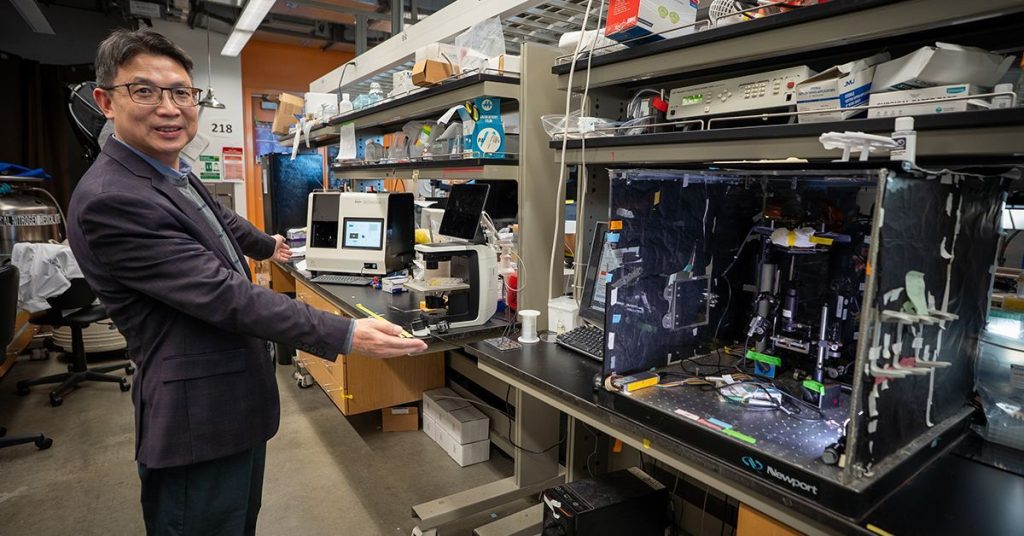
Researchers at University of California San Diego have been awarded up to $25.8 million from the Advanced Research Projects Agency for Health (ARPA-H) to develop fully functional, patient-specific human livers using 3D bioprinting.
The project is led by Shaochen Chen, a professor in the Aiiso Yufeng Li Family Department of Chemical and Nano Engineering at UC San Diego’s Jacobs School of Engineering. The goal is to create transplantable livers grown from a patient’s own cells.
The research brings together specialists in engineering, liver biology, imaging, surgery, and artificial intelligence from across the UC San Diego campus. The team is working to fabricate life-sized human livers that replicate the structure and function of natural organs.
Chen’s bioprinting technology uses digitally controlled light patterns to solidify cell-containing materials with high spatial resolution. This method allows the creation of complex, multi-cellular tissue structures in seconds rather than hours.
A major focus of the project is the development of vascular networks within the printed liver. These networks are necessary to support tissue survival and function. The team has incorporated artificial intelligence tools to help design and manufacture these internal structures.
Previous work from Chen’s lab demonstrated the ability to bioprint small liver tissue models derived from human induced pluripotent stem cells. Although only millimeters in size, these tissues replicated key liver functions and were used for drug testing applications.
The current project builds on more than two decades of bioprinting research. It aims to scale the technology from laboratory models to full-sized organs suitable for transplantation.
The researchers are collaborating with Allele Biotechnology, a San Diego-based company that specializes in personalized stem cell generation and clinical-grade cell manufacturing. The company will support the transition from research-scale production to regulated manufacturing processes.
Additional UC San Diego investigators participating in the project include faculty from the School of Medicine and the Jacobs School of Engineering, spanning multiple clinical and technical disciplines.
Article & image Source: UC San Diego
